A Sample of My Articles
Article 1: J.D. Vance: A Childless Cat Lady Responds
https://www.counterpunch.org/2024/08/02/j-d-vance-a-childless-cat-lady-responds/
ugust 2, 2024
J.D. Vance: A Childless Cat Lady Responds

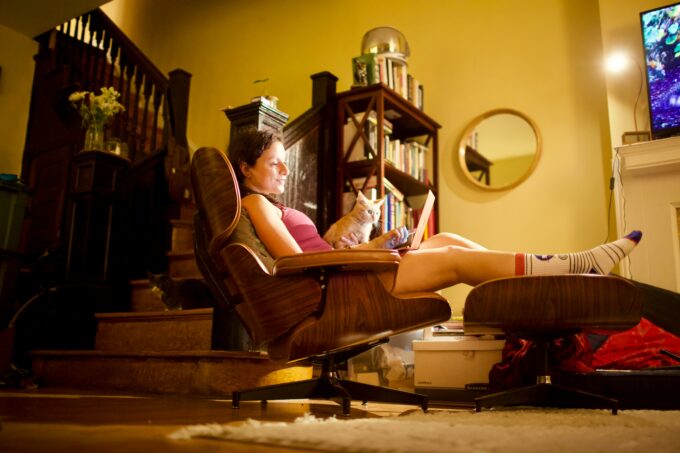
Image by Jessica Ramer.
People who know J.D. Vance describe him as a true intellectual and an all-around good guy. Overcoming a troubled childhood marked by parental substance abuse and domestic violence, he served in the Marine Corps, graduated summa cum laude from college, and attended Yale Law School. While still in law school, he began work on Hillbilly Elegy, a book that has garnered favorable reviews from people on both sides of the political divide.
Unfortunately, his intellectual acumen fails him when he writes about childless women. While some news reports have implied that these comments were a one-time, impromptu gaffe during an interview with Tucker Carlson, in fact, Vance sent out at least six emails about childless people that bordered on demagoguery.
The subject headings—the capitalization is his— for these six emails are:
August 3 ICYMI: Why are we listening to childless cat ladies?
August 4: No more CAT LADIES:
August 9: JD Vance: The Childless Left is Ruining America
August 17: Childless People Don’t Have a Stake here
August 18:(Again) The Childless Left is Ruining America
In choosing these headlines, Vance displayed both thoughtlessness and viciousness.
First, they assume that the only way to have a stake in America is to reproduce. Thus, childless educators, medical professionals, and first responders who work to teach, heal, and protect other people’s children have less of a stake than parents, even neglectful ones. Childless adults whose taxes subsidize schools that they do not benefit from should have no say in determining this country’s future, according to Vance. Since scientists working to combat diseases common to children often receive federal grants funded in part by taxes paid by all those cat ladies, maybe, just maybe, this help for other children should give them a voice in our government.
Childless cat ladies who assist relatives in caring for their children don’t contribute enough to have a stake in our country, even though in some cases they are picking up the slack for parents who have fallen down on the job because of drug addiction or disinterest in their offspring. Caring for what biologists would call collateral kin counts for nothing in Vance World.
As a military veteran, Vance should know that up to 1300 American men sustained genital injuries in the Iraq War. Many of them will be unable to reproduce. Vance, however, served as a press liaison—a relatively safe position although one not devoid of real danger. He was lucky. Almost 1300 men were not. Sometimes, women lose their only child in war and thus become childless. How is it possible that an educated military veteran can make such sweeping generalizations without considering these cases and the pain that his comments might cause to people in this situation?
As a convert to Catholicism, Vance knows that countless priests and nuns have opted not to reproduce. Many have toiled to feed and educate other people’s children. Generations of Catholic students have benefited from the high-quality education and orderly environment that these schools provided. Poor families often receive help with food, clothing, and utility bills through Catholic charities founded by the childless priests and religious. I guess their contributions mean squat, too.
Since Vance seeks a political career, he might reflect on the fact that neither George Washington nor James Madison, who is largely responsible for the US constitution, had biological children. Our tenth president, John Tyler, had fifteen. It is safe to say that Washington and Madison contributed more to our country than Tyler, a wildly unpopular president.
Vance descends to new levels of crassness when he links childlessness to sociopathy. An Ivy-League-trained lawyer should know what constitutes good evidence—and observations made while surfing the internet is not it. He does not cite expert opinion or the results of peer-reviewed research. To make this bombshell of a claim without providing proof differs little from Joseph McCarthy’s demagoguery.
It seems to me that deciding to have children and then leaving others to care for them smacks of sociopathy far more than choosing not to have them. After all, such people have enhanced their genetic fitness by ensuring that their genes survive into the next generation while investing nothing in their children’s upbringing. (I am not referring here to people who decide to place children for adoption. This decision, usually the result of an unintended pregnancy, is usually made out of love and with the best interests of the child in mind. I am referring here to people who deny their children a stable home of any sort, thus leaving them in a kind of limbo.)
In linking childlessness to sociopathy, Vance mistakes correlation with causation. Even if there were a link between childlessness and sociopathy—a doubtful claim—it does not follow that childlessness causes sociopathy. The link may be in the other direction: sociopathy may lead to less childbearing. In the absence of evidence, it is safer to assume no link at all.
By choosing name-calling rather than a critical examination of policies, Vance has resorted to an ad hominem argument, a concept that a Yale graduate should be familiar with. He has failed to demonstrate in these emails exactly how the policies promoted by “childless cat ladies” impair the future of the next generation. Generally, liberals of the kind Vance attacks often favor assistance to parents and young children—policies that mean high taxes for the childless without benefit to them—far more often than do “pro-family” conservatives.
If the thoughtlessness of Vance’s comments were not bad enough in their own right, their misogyny is chilling. The phrase “childless cat lady” hints at the more common phrase “crazy cat lady,” which evokes images of lonely, impaired women who become cat hoarders and are subjected in their old age to the humiliation of newspaper headlines detailing the poor condition of their homes. Thus, Vance summons this image of alleged female instability without saying so directly, a tactic that leaves him with plausible deniability.
The subject heading in his first two emails—“Why are we listening to childless cat ladies” and “No more CAT LADIES”—refer explicitly and solely to women. His later emails adopt a less misogynistic tone, referring only to “childless people” and “the childless.” However, none hold childless men up to the same opprobrium he heaps on women. There are no childless cat gentlemen or childless football devotees. I can only conclude that Vance feels aggrieved that powerful women have different opinions than he has and rather than debate their policy proposals on their merits, has decided to make a personal attack. He has tried to weasel out of the consequences of his remarks by claiming that his objection lies in his opposition to leftist policies, but this point was not at all evident in his emails. He has compounded the damage by refusing to apologize, even after Fox News host Trey Gowdy offered him the opportunity.
There is a further irony in Vance’s attacks. By seeking a national political career, first as a senator and then as vice president, Vance has chosen a life that includes long hours and frequent traveling. There will be many days when he will leave home before his children get up and arrive only after they are asleep. Thus, he will spend far less time caring for his own kids than many cat ladies spend working with other people’s children.
Most important for the nation, however, is that Trump has selected a vice president—who, given Trump’s age might easily ascend to the presidency— willing to suspend reason, fairness, and kindness in favor of vitriol and demagoguery that falls most heavily on women.
Article #2: Sprouted Brown Rice Reduces Fatigue, Anger, and Depression in New Mothers
Nothing is more exhausting than being the parent of a newborn. The 2 a.m. feeding. The 4 a.m. feedings, the 6 a.m. feedings. Diaper changes. Colic. All of on top of the exhausting rigors of pregnancy and childbirth. The Princess of Wales--when she was still the Duchess of Cambridge--looked great when she left the hospital with her newborns because she had a team of hair stylists and makeup artists helpiing her look great. For other mothers, the exhaustion shows on their faces.
Japanese researchers, however, found a food that helped new mothers feel less exhausted, angry, and depressed.
That food is sprouted (or germinated) brown rice. Sprouted brown rice has these effects because sprouting increases the content of gamma-aminobutyric acid (GABA), a chemical messenger in the brain.
A 2024 study found the following benefits of GABA supplementation for 90 days:
- Better sleep
- Reduced depression
- Increased heart rate variability--a good thing.because it indicates the autonomic nervous system is better able to adapt to changing conditions.
Best of all, sprouted brown rice is easy to make, requiring only slightly more effort to make than plain rice. Because of the prolonged soaking, sprouted brown rice requires less time to cook and tastes sweeter than unsprouted brown rice. The soaking process also removes much of the arsenic that is found in trace amounts in rice.
Equipment Needed:
1. Brown rice--white rice will not work because it will not sprout
2. A glass jar or porcelain bowl for soaking the rice
3. A lid or cover for the jar or bowl to keep the rice clean
4. A sprouting lid or wire strainer
The steps:
1. Rinse the rice and soak brown rice in five times as much water overnight or for up to 24 hours.
2. Rinse the brown rice again.
3. Place the brown rice in a mason jar and cover with a sprouting lid--available online. Alternatively,
put the rice in a strainer or colander with holes fine enough to prevent the rice from falling out.
4. If you are using a jar and sprouting lid, stand the jar on its side to allow water to drain out. The
water must be able to drain; otherwise, the rice will spoil. If you are using a strainer or colander,
place the rice in the colander. Place the colander over a bowl to catch the water than drains. Cover
the rice itself with a plate or cloth to keep the rice clean.
5. Rinse the rice at least 2 and preferably 3 times per day.
6. Stop sprouting when you see a small, white swelling at the end of each grain.
It takes between 24 and 48 hours for this swelling to appear. This marks the beginning of germination. Since the study cited above claims that GABA production is maximized within 48 hours, you can stop there and cook the rice as you usually would.
Articl #3: Vitamins for Teenagers With Depression and Anger
Teen depression is a serious and potentially life-threatening problem: 500,000 teens in America attempt suicide every year. Five thousand of them succeed. If a depressed teen seems to be at risk of hurting himself or others, caregivers should seek medical help immediately. However, medical research indicates that there are nutritional strategies that you can use to reduce the severity of teen depression and the anger that often accompanies it.
Japanese researchers studied more than 6,000 school children and found that higher levels of vitamin B6, as measured by dietary questionnaires, were correlated with lower rates of depression among both boys and girls. This result confirms an earlier study of 140 people in Massachusetts, which found that higher levels of depression were correlated with lower plasma levels of this vitamin.
Although the link between higher levels of vitamin B6 and lower rates of depression is unclear, a likely explanation is that it is necessary for the synthesis of the neurotransmitter serotonin. Because serotonin is a precursor to melatonin, the sleep-inducing hormone, vitamin B6 may improve sleep as well.
Other studies show that this vitamin can reduce the levels of the hormone prolactin, which is linked to higher levels of hostility and anger in young women. Because high levels of prolactin correlate with premenstrual syndrome, higher vitamin B6 intake may minimize mood changes during this phase of the reproductive cycle.
If your teen is deficient in vitamin B6, increasing her intake of this nutrient may improve her depression. However, if her levels of this vitamin are already adequate, supplementation will probably provide no benefit.
Folate
Folate, of which folic acid is one form, has also been implicated in depression. The same Japanese study that found a link between low vitamin B6 levels and depression also found a link between low folate levels and depression. Researchers in Poland found a similar correlation.
Folate plays a crucial role in regulating various molecules that affect the nervous system. It aids in the production of S-adenosylmethionine, which is necessary for the synthesis of serotonin and the formation of myelin sheaths around the nerves. Folate also decreases homocysteine, an amino acid that is often elevated in depressed patients and that impairs the function of neurotransmitters and their receptors.
Vitamin C
One of the symptoms of vitamin C deficiency is depression 2
⭐This is a verified and trusted source
"Psychosomatic Medicine"; Dietary Folate, Riboflavin, Vitamin B-6, and Vitamin B-12 and Depressive Symptoms in Early Adolescence: the Ryukyus Child Health Study; K. Murakam, et al.; October 2010
Goto SourceHugh D. Riordan, M.D., notes that giving vitamin C supplements to someone who is not deficient in the nutrient will have no effect, stating: "It is very important to look at the individual biochemistry to see what is missing and what needs to be improved. Then you can do a great deal."
Zinc
Dr. Riordan, in the same article, discusses a woman with depression who was greatly helped by zinc supplementation 1
⭐This is a verified and trusted source
"European Journal of Clinical Nutrition"; Effect of Zinc Supplementation on Mood States in Young Women: A Pilot Study; T. Sawada, et al.; March 2010
Goto SourceDietary Strategies
The latest thinking on depression is that it is an inflammatory disorder and that the cytokines produced by inflammation alter neurotransmitter levels. A recent review of the medical literature found that omega-3s may be a good therapy for childhood and adolescent depression, perhaps because they reduce inflammation. Some studies have also found that they are effective in reducing hostility in young people.
If insomnia is a problem for teens, they may want to supplement with flax oil because it contains a mix of omega-3, omega-6, and omega-9 fatty acids that act as precursors for substances involved in the initiation and maintenance of sleep.
A few people with chronic depression have improved by eliminating gluten, which is found in wheat, barley, rye, triticale, spelt and kamut, from their diets. Others have improved by identifying and eliminating food allergens or mold in their environments.
The lesson from research on vitamins and depression, though, is that there is no "magic bullet" for depression that will be equally effective for everyone. The best nutritional strategy for combating depression is to eat a balanced diet rich in whole grains, vegetables and omega-3 fatty acids and to eliminate foods that the person, for whatever reason, doesn't tolerate well. A doctor can order blood work that will determine what nutrients your teen may be lacking, thus allowing you to supplement her diet in the most effective way. This process requires effort and discipline, but it can save your teen from years of unhappiness.
Article 4:
Growing Food for the
First Time
My first attempt at growing vegetables was a spectacular failure.
I planted carrot and lettuce seeds in July, not knowing that these were
cool-weather crops. The wood chips I used as fertilizer sucked nitrogen from
the soil, starving my greens. The only vegetable I succeeded in growing had
been planted by accident: the tiny black seeds spilled on the soil after I
dropped the packet they came in turned more turnips than I could have eaten in
a year.
I share these embarrassing details so that you will not make
the same mistakes I did.
With a bit of knowledge, anyone can grow food at home. Even
apartment dwellers can raise some of their own produce by using sprouting jars,
window boxes, and tiered planters equipped with grow lights. The reward
is food that is fresher, tastier, and more nutritious than the vegetables that
have been picked while unripe and trucked across the country.
Successful vegetable gardening
begins with asking the right questions.
·
Where will the garden be located? Choose the
sunniest spot.
·
Is that space close to water? Nothing will make
you get tired of gardening faster than having to lug water –or drag and unkink
a hose—from faucet to garden bed.
·
What do you really want to eat? Don’t grow things
you don’t like that much. If you a planting an unfamiliar food, do you have
recipes for it that you might enjoy?
·
Are the plants you want to grow cool or
warm-weather crops? Oranges don’t grow
in Minnesota, and celery won’t grow in Mississippi. Don’t try to defy nature.
You will lose.
·
What fertilizer will you need? In general,
greens need soil that is rich in nitrogen while beans thrive on less nitrogen
but more potassium and phosphorous.
Should the soil be acid or alkaline? For a
new gardener, the easiest solution is to buy high-quality raised-bed soil.
·
What
about pest control? If you grow vegetables indoors, those few insects can be
picked off by hand. Protecting crops grown outside is trickier. The easiest
solution is to use garden hoops covered by sheer netting that allows sunlight
and water through the weave but that keeps out most bugs.
·
Research each vegetable you want to grow. Good
sources of information include agricultural extension websites and gardening
videos uploaded to video-sharing websites. I tried for years with no success to
grow carrots until I watched a video of a farmer who covered newly planted
carrot seeds with cardboard to hold moisture in the soil. After watching that
video, I finally harvested a small but tasty batch.
In addition to providing you with fresher, tastier
vegetables, your garden will give you a deeper appreciation for nature and the great satisfaction
that comes from eating food that you have grown yourself--and if you end up
with more turnips or zucchini than you would ever want to eat, you can always donate
‘the extra to a food bank.

Comments
Post a Comment